Cedar Roof Repair
Clear judgment. Targeted work. No unnecessary disruption.
Most homeowners arrive here because something on their cedar roof caught their attention. It may be a slipped shingle, a split area, a ridge cap shifted after a storm, or a water stain following wind-driven rain.
That reaction is normal.
What matters is understanding how cedar roofs behave — and what repair actually means in practical terms.
Understanding Cedar Roof Behavior
Cedar roofs are not fragile systems. They are layered, forgiving, and far more resilient than most people realize. Many visible changes are simply part of natural aging, and the roof often continues performing well without intervention.
The goal is not to react to every visible change, but to understand which conditions truly affect performance — and which do not.
What Aging Actually Looks Like on a Cedar Roof
Cedar changes visibly as it ages. Left untreated, that aging follows a predictable pattern.
It often begins with surface checking — fine vertical hairlines that appear as the wood dries and releases internal stress. Over time, those lines deepen as the roof moves through repeated wetting and drying cycles.
As cedar expands and contracts, edges may cup and individual shakes can warp, twist, or lift slightly. Checks may become cracks or splits. The exposed surface gradually weathers, thins, and loses girth under years of sun and moisture.
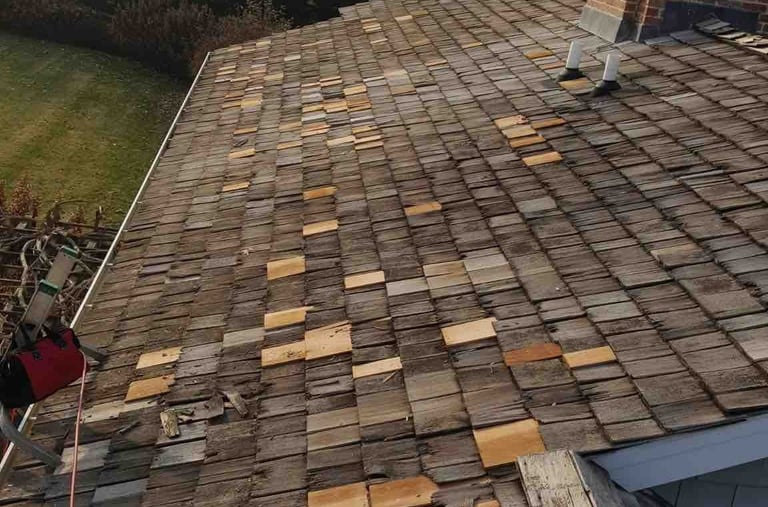
Most of this happens slowly and often goes unnoticed from the ground. When pointed out during an inspection, it can sound concerning, but it does not automatically mean the roof is failing.
Surface appearance alone does not determine whether repair is warranted. What matters is whether the layered system beneath the exposure remains intact and capable of shedding water effectively.
Why the Exposure Matters
The exposure is the visible portion of each cedar shake or shingle. It absorbs the full impact of sun and moisture, so it weathers first. It defines the roof’s appearance and serves as the first layer of protection.
As it absorbs wear, the overlapping layers beneath continue shedding water — unless true rot is present.
Over time, exposure pieces dry, thin, and become brittle. Splitting, cupping, warping, and cracking are the natural results of long-term movement and weathering — not sudden failure
When repairs involve nail removal and replacement, the question is not whether the exposure looks perfect. It is whether the surrounding wood and supporting layers can tolerate the work without creating new weaknesses.
If active interior leakage is occurring, the situation should be addressed promptly. Even then, cedar failures are usually localized and often corrected without widespread disturbance.
In most other cases, repair decisions depend less on what is visible and more on the roof’s age, flexibility, and overall condition. A split or missing exposure piece on a younger roof may justify replacement. On an older roof, disturbing brittle wood can create more problems than it solves.
Experience matters here.
Why Over-Repair Is Usually the Real Mistake
On older cedar roofs, doing too much is where problems begin.
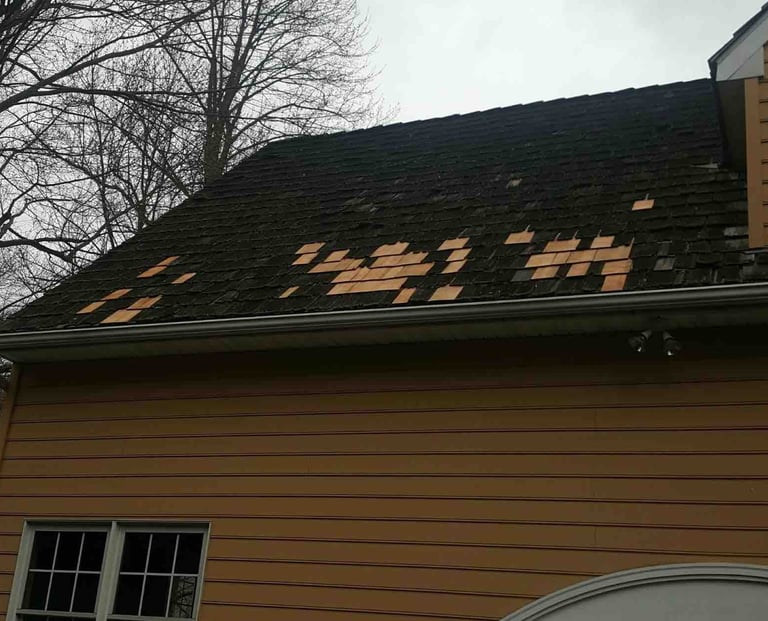
Disturbing thin or brittle wood to install new pieces often creates more disruption than improvement. One replacement leads to another. Surrounding pieces crack or loosen. What began as a small concern can become unnecessary intervention.
New wood rarely blends with weathered surfaces. The result is visible patchwork, added cost, and little improvement in performance.
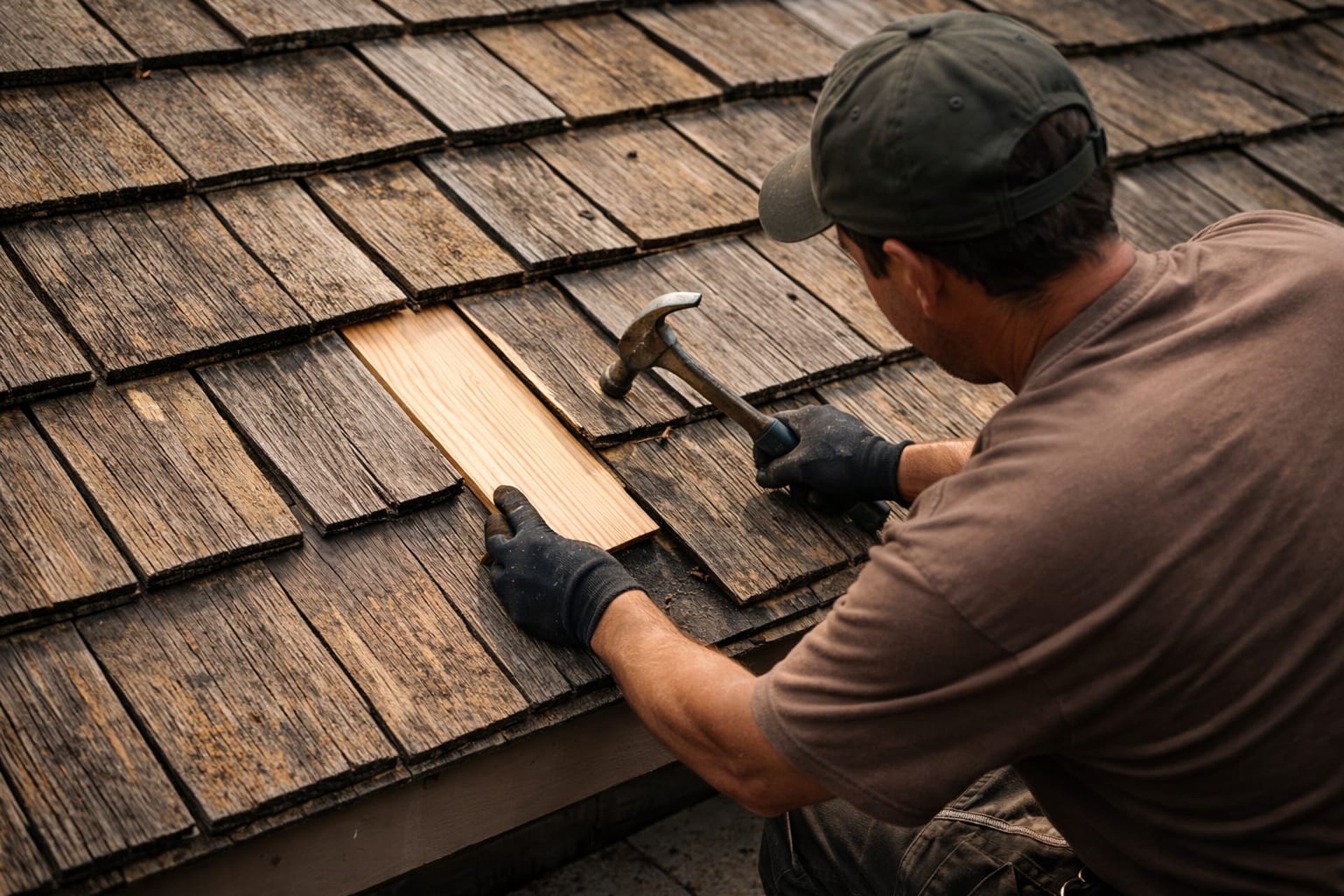
In many late-life situations, a well-placed metal shim accomplishes more than several replacement shingles. It reinforces the system quietly without disturbing cedar that is still performing.
Good cedar repair is controlled and precise — not aggressive


How Repair Decisions Change With Roof Age
On younger roofs with strong, flexible surrounding wood, replacing a damaged exposure piece often makes sense. The repair will weather naturally and support long-term performance.
On older roofs past cleaning and preservation, the equation changes.
The surface may be dry and brittle. Years of weathering mean new wood will not blend. Widespread cosmetic replacement rarely restores uniformity and often creates visual inconsistency without improving function.
The roof’s job is to shed water. It is not to look new.
On late-life roofs, targeted reinforcement consistently outperforms widespread preventative replacement.
A Smarter Way to Approach Repair
Cedar roof repair is rarely about urgency. It is about informed judgment.
Understanding how the system works — and how it ages — allows decisions to be made calmly and correctly. Some conditions warrant action. Others warrant restraint.
If Your Roof Is Already Covered
If your roof is covered under one of our active Leak & Repair Guarantees or Transferable Warranties, your agreement defines how qualifying concerns are handled during the coverage period. In those cases, repair decisions are made within an established framework that supports the roof as it exists today.
If something on your roof has your attention, schedule an evaluation. We will assess the condition, explain what is happening, and help you decide whether repair, reinforcement, or monitoring is appropriate.
That is how cedar roofs are managed responsibly — without panic, without overcorrection, and without unnecessary expense.
Gallery


Schedule a roof evaluation and we’ll assess the roof together, share what we see, and help you understand your options so you can decide what makes sense for you.
Schedule Your Cedar Roof Evaluation
Address
180 West Main St. Pottstown, PA. 19465
Contact
Hours of Operation
Monday - Friday: 9:00 am - 5:00 pm
Saturday: 10:00 am - 2:00 pm
Sunday: Closed